1886
First survey
Carl Schuchhardt becomes the first to study the site systematically.

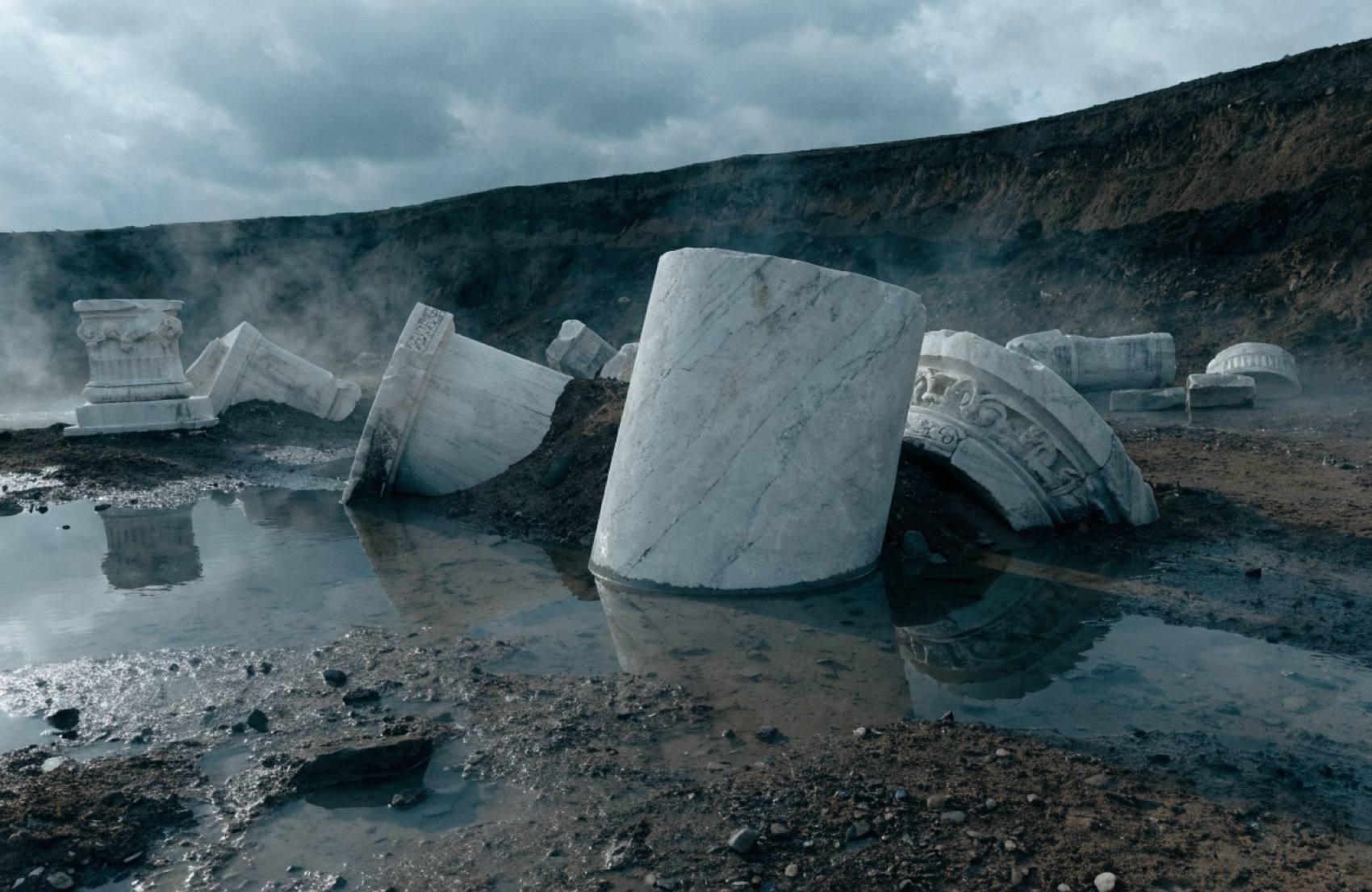
From beneath earth and water into the light: a century and a half of excavation, conservation and the re-raising of columns.
What hid Klaros for centuries also protected it: the alluvium of the Ales stream and the rising groundwater. Excavation therefore demanded constant drainage and engineering.
Today the colossal statues, the altars and one of the largest bodies of Greek inscriptions in the ancient world can be seen once more.
Scroll left to right.
Carl Schuchhardt becomes the first to study the site systematically.

Theodor Macridy and the French archaeologist Charles Picard reveal the monumental gateway and the earliest structures.

The French epigrapher Louis Robert and his wife Jeanne bring to light the Doric temple, the colossal statues and hundreds of inscriptions.
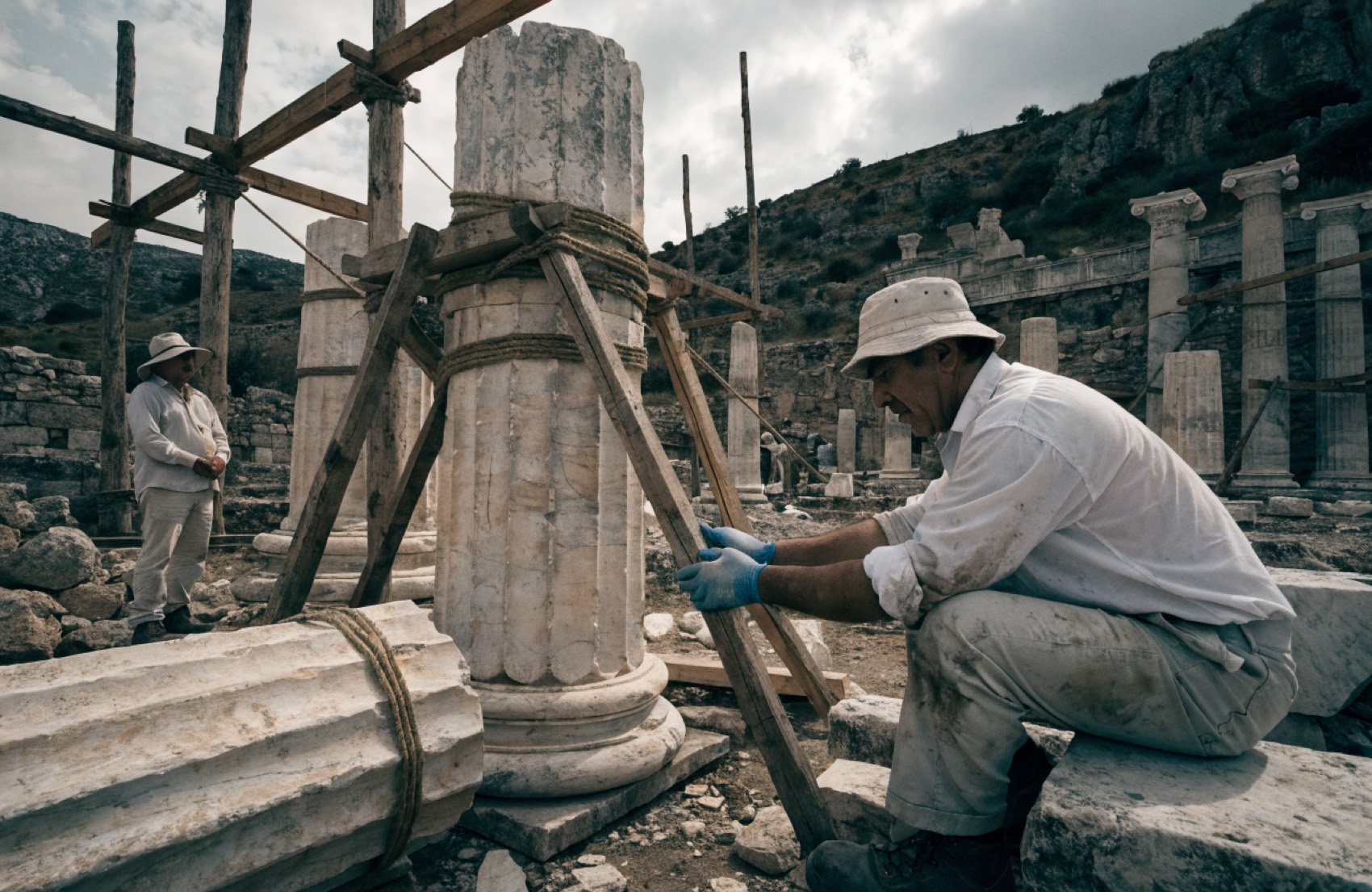
Under Prof. Dr. Nuran Şahin, excavation, conservation and anastylosis (the re-raising of fallen columns) continue.
From temple to altar, from statues to inscriptions.
Begun in the Hellenistic age and never fully completed, the monumental temple dominated the valley with its colossal columns.
A seated Apollo holding his lyre, with standing Artemis and Leto; this trio, over eight metres tall, is among the rare surviving examples of ancient temple sculpture.
Four rows of iron rings set in stone blocks reveal a system in which nearly a hundred animals could be sacrificed at once: the only such example preserved at this scale.
Hundreds of dedications carved on columns, steps and benches: the millennia-old testimony of delegations and pilgrims from distant cities.